Scammers have recently been targeting Wells Fargo customers with deceptive emails and text messages. These scams can appear quite convincing, leading to potential financial loss and compromised personal information. Here’s what you need to know about Wells Fargo scams and how to protect yourself.
What Are Wells Fargo Scams?
Wells Fargo scams are phishing attempts where scammers impersonate Wells Fargo to trick you into providing your personal and financial information. The ultimate goal of these scams is to steal your login credentials and gain access to your bank account. These scams try to create a false sense of urgency, prompting you to act quickly without verifying the legitimacy of the message.
How Do Wells Fargo Scams Work?
Here’s how these scams typically unfold:
- Initial Contact: You receive an email or SMS claiming there is an issue with your Wells Fargo account.
- Included Link or Button: The message includes a link or a button.
- Fake Website: Clicking the link or button directs you to a fake login page that closely resembles the official Wells Fargo site.
- Stolen Credentials: Any information entered on the fake website is captured by the scammers.
- Account Takeover: Using the stolen credentials, scammers gain access to your Wells Fargo account, allowing them to view personal information and make unauthorized transactions.
Examples of Wells Fargo Scams
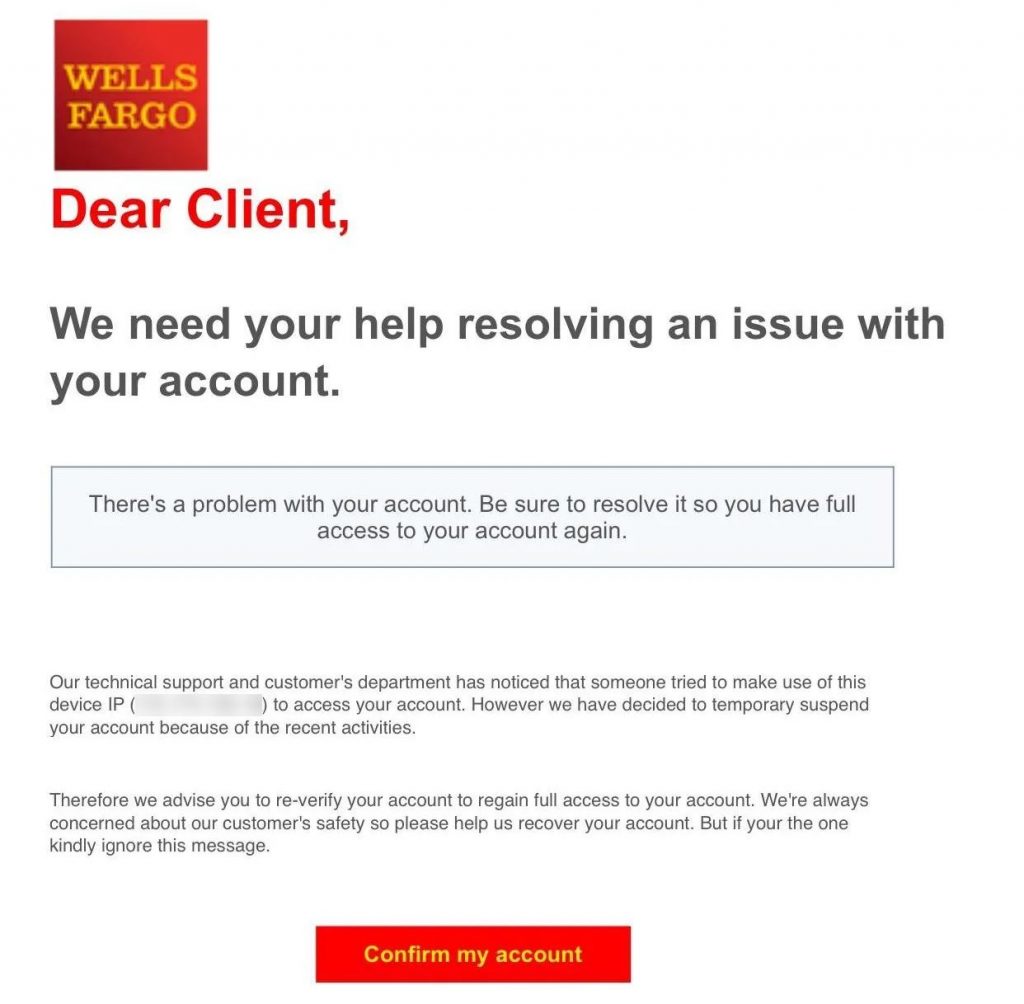
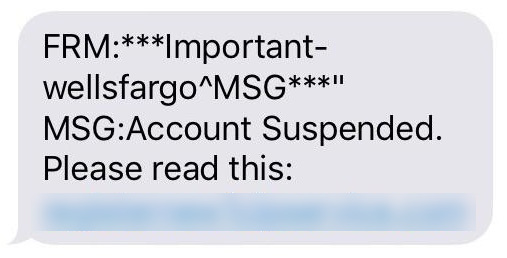
Here are some examples of Wells Fargo scam emails and texts:
How to Identify a Wells Fargo Scam
- Generic or Missing Greetings: Be cautious of messages that start with a generic greeting like “Dear Customer” or have no greeting at all. Legitimate companies typically address you by name.
- Sense of Urgency: Scammers often use urgent language to prompt immediate action without giving you time to think.
- Suspicious Links or Phone Numbers: Carefully inspect any links or phone numbers included in the message. Scammers often use URLs that are slightly altered to appear legitimate.
- Spelling and Grammar Errors: While sophisticated scams may have fewer mistakes, spelling and grammar errors can be a red flag.
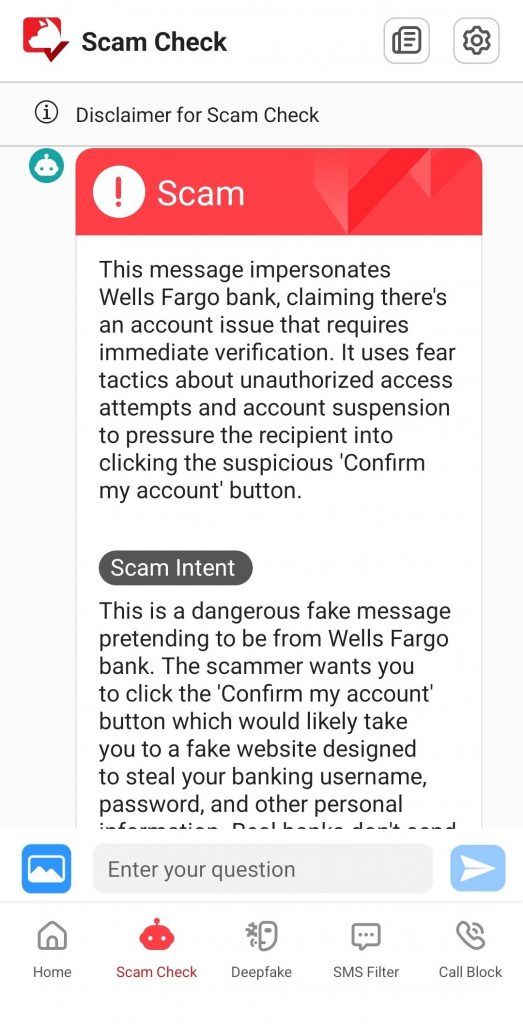
- Trend Micro ScamCheck: Send a screenshot of a suspicious text or email to Trend Micro ScamCheck to quickly get an answer about whether it’s legitimate or not. Here’s what ScamCheck thinks of the Wells Fargo scam email example:
ScamCheck: Your All-in-One Defense Against Scams
Available for both Android and iOS, ScamCheck offers comprehensive protection from deceptive phishing scams, scam and spam text messages, and more:
- Scam Radar: Stay ahead of scams with early warnings before you can fall victim.
- Scam Check: Instantly analyze emails, texts, URLs, screenshots, and phone numbers with our AI-powered scam detection technology.
- SMS Filter & Call Block: Say goodbye to unwanted spam and scam calls and messages. Minimize daily disruptions and reinforce your defenses against phishing.
- AI Video Scan: Detect face-swapping scams in real-time during video calls, alerting you if anyone is using AI to alter their appearance.
- Web Guard: Surf the web safely, protected from malicious websites and annoying ads.
To download Trend Micro ScamCheck or to learn more, click the button below.
If you’ve found this article an interesting or helpful read, please SHARE it with friends and family to help keep the online community secure and protected. Also, please consider clicking the LIKE button or leaving a comment below.
0 Comments
Other Topics
You Might Also Be Interested In...
![Is Itwasu[.]com a Scam? (Free Puffer Case?)](/_next/image/?url=https%3A%2F%2Fnews.trendmicro.com%2Fapi%2Fwp-content%2Fuploads%2F2022%2F10%2FiStock-1394217309-768x512.jpg&w=3840&q=30)