
Imagine this: You’re browsing a marketplace when a friendly stranger messages you. They soon suggest moving the conversation to private messaging apps like WhatsApp. Then it gets weirdly specific: they mention your name, your city, or the item you viewed. It feels harmless, maybe even convenient. But this is often how platform hopping scams begin. Let’s walk through how to spot these tactics and stay protected.
What is a platform hopping scam?
Platform hopping is when scammers move you from one platform to another channel, such as email or private messaging apps such as WhatsApp or Telegram. After trust is built over time, they end up asking you to make payments or provide personal information.
Why do scammers move to other platforms?
- Once you leave the original marketplace or app, there may be fewer security measures and less stringent monitoring, making it easier for scammers to operate undetected.
- It may be harder for you to get refunds or help through the original platform’s protections.
- Switching to less secure channels allows scammers to efficiently execute their playbooks across multiple channels and at scale, increasing their chances of success.
INTERPOL indicates that scams hop across platforms : from social media to messaging apps, and then ending up on fake investment websites. Trend Micro also predicts that scams are becoming increasingly AI-driven and multi-channel than ever.
Why do the messages feel “weirdly specific” now?
Today’s scammers can use AI tools to make their messages incredibly convincing and highly personalized.
With AI, they can quickly rewrite messages to sound natural and remove more obvious red flags such as typos or grammatical errors. They can also easily gather personal details about you from what you’ve posted publicly, personal data involved in a data breach, or conversational context from your profile or something else you’ve shared online.
Meta recently reported taking down millions of accounts linked to organized scam centers whose tactics were to move victims across multiple platforms.
What do platform hopping scam looks like?
Here are 4 common scam scenarios. Does anything seem familiar?
#1 Marketplace
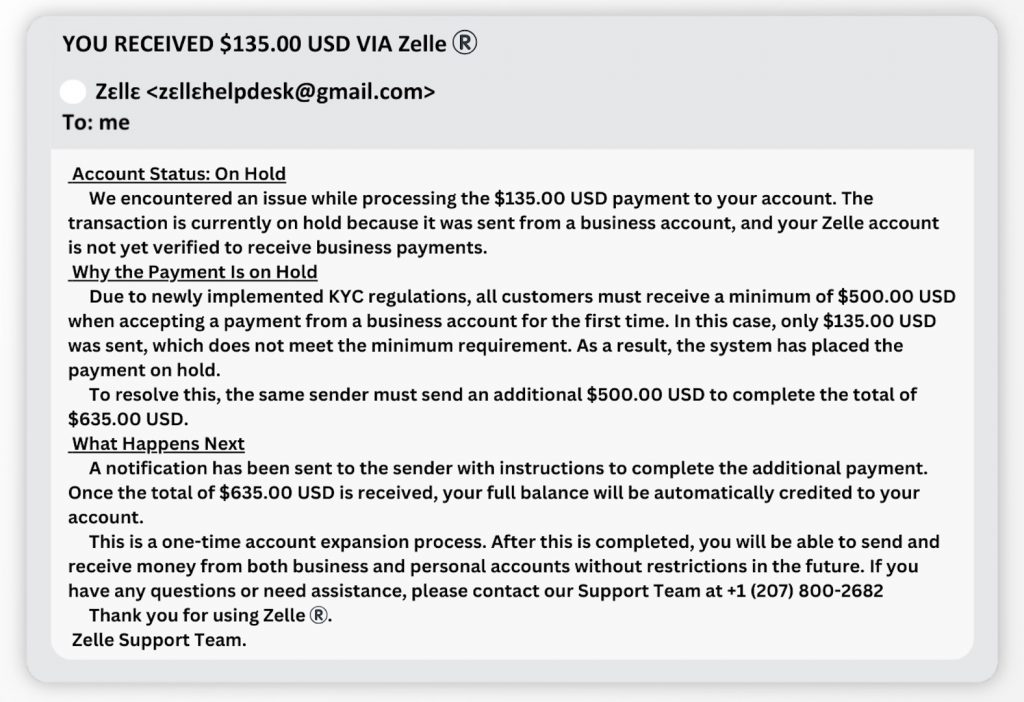
A buyer for something you are selling messages you and quickly suggests moving to WhatsApp to “discuss payment details.” They mention using Zelle. Shortly after, you get an official-looking email saying your Zelle payment is “on hold” and needs verification.
#2 Support Impersonation:
Someone claiming to be customer support contacts you about an urgent issue with one of your accounts. The “support” contact asks you to switch to Telegram to have a “secure” conversation about troubleshooting your account, to request verification codes you may receive or to allow remote access to your device.
#3 Job Offers
A recruiter contacts you with a too-good-to-be-true job offer and suggests having an interview over WhatsApp. They then mention requiring an advanced fee before you can begin.
#4 Dating / Investment
Your online match mentions a “guaranteed” investment opportunity and promises free bonuses. You are then asked to move from the dating app to WhatsApp or Telegram to claim your “special gift.”
Notice the pattern? They all want to move you off the original platform quickly.
6 red flags to spot
Even if the messages look perfect, always remember to watch out for these signs:
- They push you to act fast with phrases like “right now” or “last chance,” and may also ask you to keep things secret, saying things like “don’t tell anyone.”
- They quickly insist to switch to another app or platform, often after just a few messages.
- They send you unknown links for things like “verification,” “tracking,” “deposit,” “release fee,” or “escrow.”
- They ask for money or your personal information such as one-time codes, QR codes, gift cards, cryptocurrency, or instant transfers using apps such as Venmo, Zelle, or Cash App.
- They refuse to provide any verification and keep making excuses. Their story might change if you suggest a video or voice call.
- They tell you not to ask anyone else for help, saying things like “Only talk to me here” or “Customer service can’t help with this.”
Steps to stay safe
Here are 5 steps to take to help you stay safe:
- Stay on the original platform. Whenever possible, keep all messaging and payments on the original platform. Report the incident to the platform if necessary.
- Verify independently. If you need to verify anything, use a channel you control. For instance, call a known number from the official website or app, not a number provided over a private chat.
- Type URLs manually. Type a URL directly into a browser or use bookmarks saved in your browser instead of using any “verification” links they send.
- Contact your bank or relevant service provider immediately if you have already shared sensitive information or sent money.
- Report to the FTC for guidance on protecting your identity and accounts.
To stay informed and protect yourself against online risks, check out Trend Micro’s 2026 Consumer Threat Predictions.
You can also check if a suspicious message is a scam with Trend Micro ScamCheck in real time:
These sophisticated tactics are designed to feel legitimate, which is why even the most careful people encounter them. Remember, always verify before taking action. You’re already ahead of the game by knowing what to look out for.