When companies experience data breaches, the stolen information doesn’t simply disappear. In many cases, it ends up shared or sold on the dark web, a hidden part of the internet where cybercriminals trade stolen data. This can include email addresses, passwords, credit card numbers, and other sensitive details. Once exposed, criminals may use this information to access accounts, commit fraud, or steal someone’s identity.
What Is the Dark Web?
The dark web is a part of the internet that isn’t indexed by search engines like Google and requires special tools to access. While it has legitimate uses, it’s also known as a place where stolen data is often traded. Because these sites are hidden, most people would never know their information had been exposed without monitoring tools.
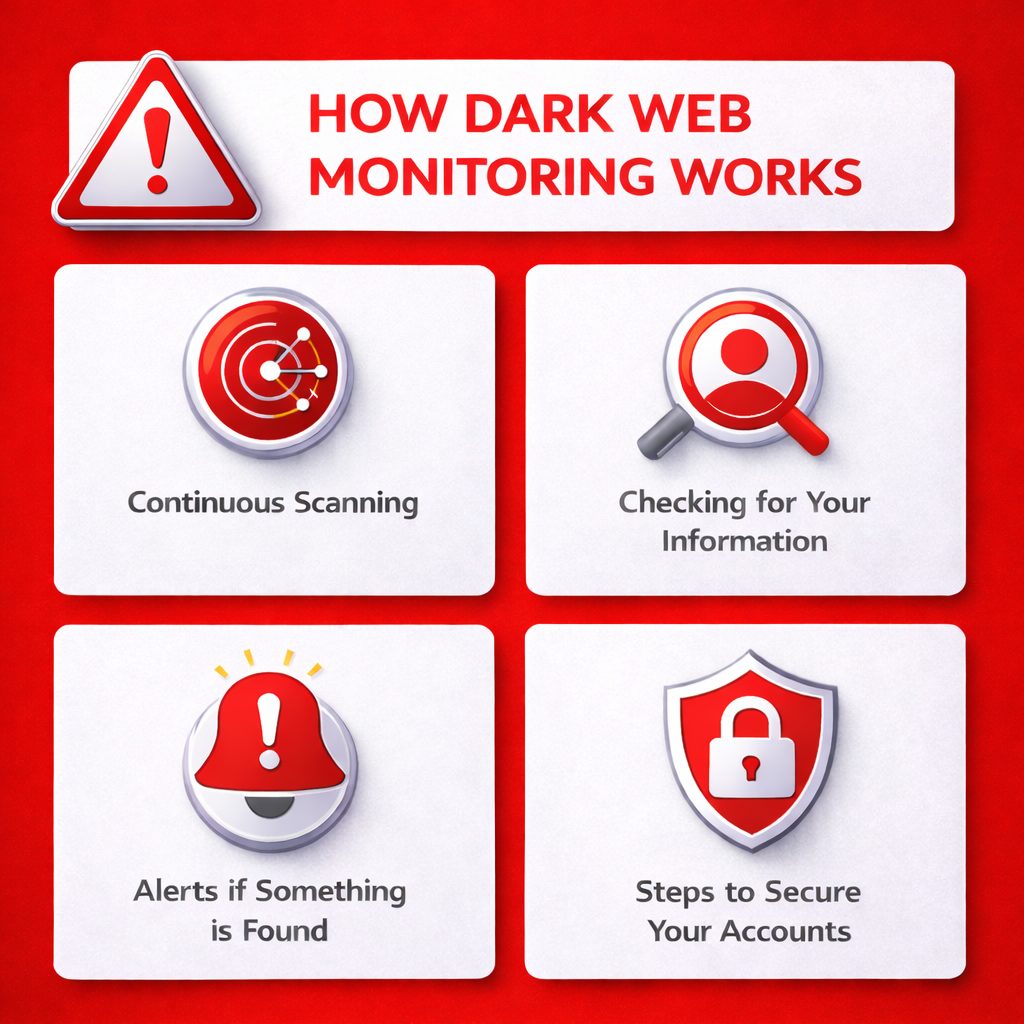
How Dark Web Monitoring Works
Dark web monitoring services continuously scan known dark web sites and breach databases looking for stolen information.
Here’s what happens behind the scenes:
Continuous scanning
- Security systems search dark web marketplaces and breach databases where stolen data is often shared.
Checking for your information
- The system looks for details linked to you, such as your email address or login credentials.
Alerts if something is found
- If your information appears in a breach or dark web listing, you receive a notification.
Steps to secure your accounts
- Once alerted, you can quickly change passwords, enable extra security, and monitor your accounts.
Why Dark Web Monitoring Matters
Data breaches are becoming increasingly common, and many people only realise their information was exposed months or even years later. By that time, criminals may already be using the stolen data.
Dark web monitoring helps reduce this risk by:
- Giving you early warning
- If your email or password appears online, you can secure your accounts before criminals use it.
- Helping prevent identity theft
- Stolen personal information can be used to open accounts, make fraudulent purchases, or impersonate you.
- Reducing the damage from breaches
- The faster you know, the faster you can act.
How Can You Keep Your Data Safe
- Use strong, unique password
- Avoid reusing the same password across multiple accounts. If one account is breached, reused passwords can give criminals access to others.
- Enable multi-factor authentication (MFA)
- Adding an extra verification step, such as a code sent to your phone or an authenticator app, makes it much harder for attackers to access your accounts.
- Be cautious with personal information online
- Limit the amount of personal information you share publicly, especially on social media. Scammers often use this information to target victims.
- Keep your devices and apps updated
- Security updates help fix vulnerabilities that cybercriminals may try to exploit.
- Use security tools that alert you to breaches
- Trend Micro ID Protection includes dark web monitoring, which scans breached databases and dark web sources for your personal information.
Already a Trend Micro Customer?
Visit your Trend Micro Account to see if ID Protection is included in your subscription.
0 Comments
You Might Also Be Interested In...